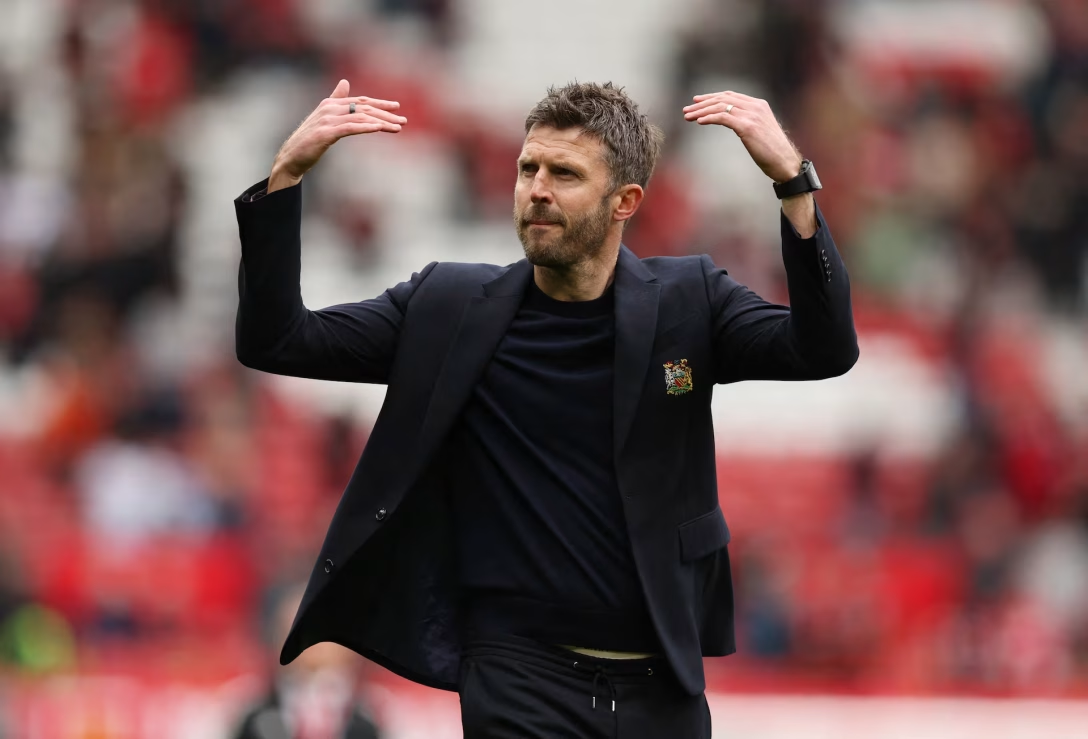
Manchester United beat Liverpool 3-2 at Old Trafford today. Kobbie Mainoo scored the winner. The crowd was, in Carrick’s own words, “alive and bouncing.” And with that result, United officially secured a return to the Champions League after two years away, ending what has been the most turbulent period in the club’s modern history.
It was, on every level, a good afternoon. And it has immediately made Manchester United’s next big decision significantly more complicated.
Carrick was appointed Jan. 13, 2026, until the end of the season. Then he was labeled as the interim/caretaker of the club, affording United the flexibility of not having to make an immediate decision on the future. If Carrick struggled, they could point to the interim label and move on without reputational damage. It was, in its own way, smart communications management.
But Carrick has not struggled. He has beaten Arsenal, Manchester City, Chelsea and now Liverpool. He has guided United from seventh in the table to third. He has secured Champions League qualification, which the club’s own financial projections suggest is worth at least £112 million in direct revenue. He has done all of this while maintaining the quiet dignity and emotional intelligence that has defined his entire coaching career.
And after Sunday’s win, when asked directly about the permanent role, Carrick said managing United “feels natural” and “feels pretty natural, if I’m totally honest.” That is not the language of a man who is preparing to step aside. That is a challenge to the board.
The communications problem United now faces is this: there is no clean answer.
If they give Carrick the permanent job, they reward results and continuity, which is exactly what the fanbase is craving after years of chaos. Mainoo, arguably the most important young player at the club, has already publicly backed Carrick for the long-term role, saying players want to “fight for him and die for him on the pitch.” That kind of dressing room endorsement is PR gold. But handing the job to an interim without a formal process also signals that INEOS does not have a coherent long-term sporting vision, they just got lucky.
If they bypass Carrick for a higher-profile name they risk the accusation that they do not value loyalty, continuity, or the players’ clearly stated preference. They risk another difficult transition. And they risk looking, once again, like a board that outsmarted itself. There is also the Bruno Fernandes dimension. Fernandes has said he wants to see who the permanent manager is before deciding his future. The timeline for that decision is tightening. United need to give him an answer before his release clause becomes actionable this summer.
How Manchester United handles the next few weeks, who they appoint, how they communicate that decision, and how they manage the expectations of players, fans, and commercial partners will define the tone of the club going into next season. Champions League football is the foundation. But it does not build itself.
Should Manchester United give Carrick the permanent job? Make the case for or against in the comments.


